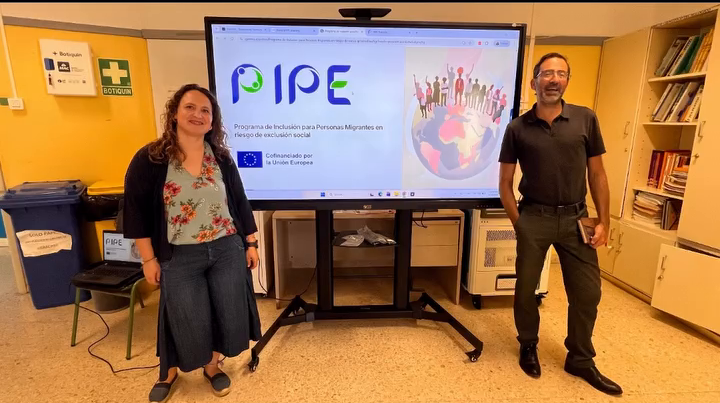

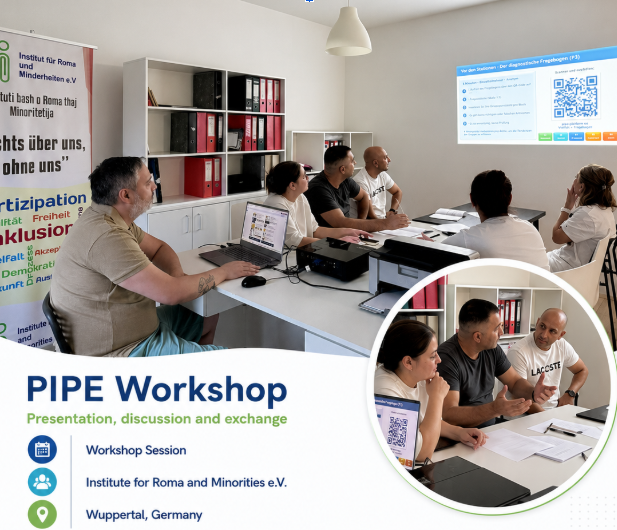
As part of Work Package 2 of the PIPE project, the Institute for Roma and Minorities Inclusion (IRMI) organised a series of activities in Germany to present, test and discuss the tools developed within the WP2 Toolbox. These included a national workshop held in Wuppertal on 30 June 2026, followed by two Colloquial Talks on 20 July and 11 August 2026.
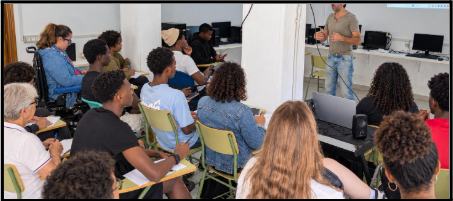
The national workshop brought together five professionals working in migrant inclusion, representing NGOs, public institutions and education and training organisations. Through presentations, practical activities and group discussions, participants explored three key resources: the National Language Teaching Guide, the Guide and Action Plan for Cultural Training, and the Strategic Reception Plan / Diagnostic Tool.
The feedback was highly positive. The Strategic Reception Plan / Diagnostic Tool received the highest overall score (4.36 out of 5), followed by the Cultural Training Guide and Action Plan (4.20) and the Language Teaching Guide (4.14). Participants particularly appreciated the practical relevance of the resources and their potential to support professionals working with migrant communities. The workshop also encouraged networking and the exchange of good practices, with participants expressing interest in sharing and applying the tools within their organisations.
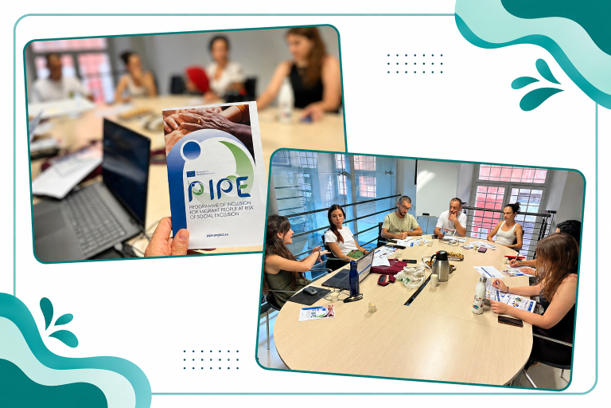
Building on these results, IRMI organised the first Colloquial Talk on 20 July 2026, involving five professionals from organisations active in migration, integration and legal support. The discussion focused on the practical application of the four WP2 resources: the PIPE online Platform, the Language Guide, the Cultural Training Guide and Action Plan, and the Diagnostic Tool..
Participants particularly valued the Language Guide for its practical teaching approaches and the Diagnostic Tool for helping users identify learning needs and access relevant resources. They also highlighted the importance of making materials more accessible to beginners and individuals with limited digital skills, while recognising that digital resources should complement, rather than replace, direct support.
The second Colloquial Talk, held on 11 August 2026, brought together another five professionals working in community support services. The meeting introduced participants to the PIPE project and its Toolbox, with discussions focusing on language learning, intercultural competences, inclusive practices and sustainability.
Particular attention was given to the long-term use of project resources and the challenges faced by migrant-support organisations, including limited funding, staff shortages and dependence on volunteers. Participants emphasised that sustainable inclusion requires continuous collaboration, organisational commitment and solutions adapted to local needs.
Together, the national workshop and the two Colloquial Talks provided valuable opportunities to validate the PIPE WP2 Toolbox with professionals working directly in migrant inclusion. The activities confirmed the relevance of the resources, generated practical suggestions for improving their accessibility and encouraged their continued use and dissemination through professional networks.
These activities demonstrate the value of combining practical tools with professional dialogue, helping translate the results of PIPE into concrete opportunities for more inclusive and sustainable integration practices.