
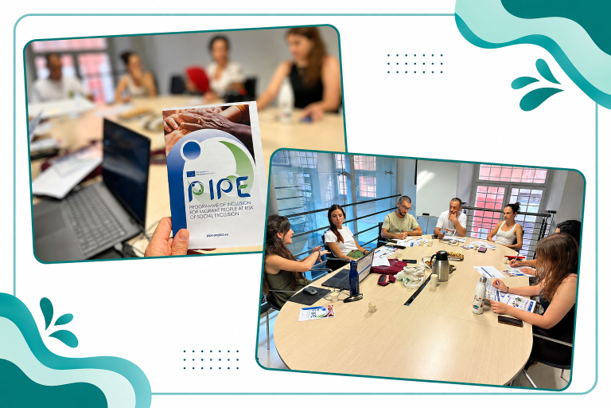
As part of the dissemination and validation activities of Work Package 2 (WP2) of the PIPE – Programme of Inclusion for Migrant People at Risk of Social Exclusion project, MAG UNINETTUNO successfully organised two Colloquial Talks and a Workshop for Professionals, bringing together experts, practitioners and volunteers working daily in the field of migrant reception, integration and language education.
These activities represented an important opportunity not only to present the tools developed within WP2, but also to collect valuable feedback from professionals, ensuring that the project results respond to the real needs of organisations supporting migrants and refugees.
Building dialogue with professionals
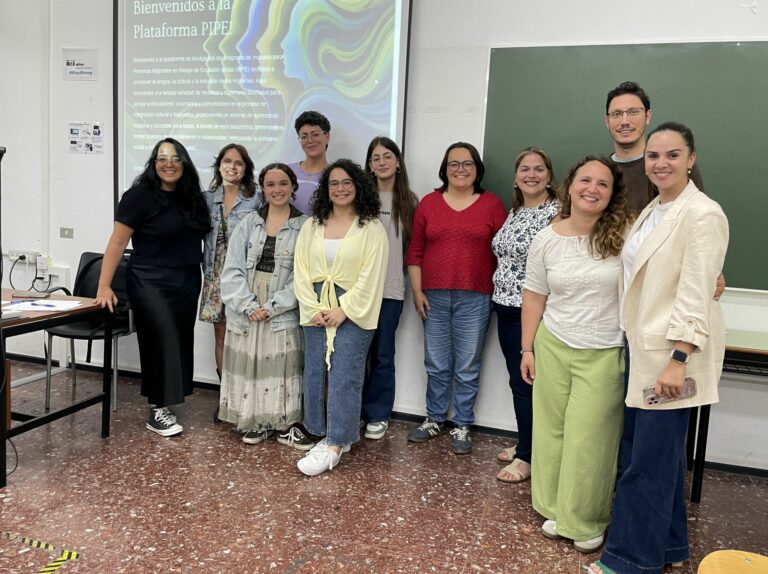
The first Colloquial Talk involved representatives from NGOs, Italian Extraordinary Reception Centres (CAS), legal support services and organisations active in migrant inclusion. Participants explored the four main WP2 outputs—the National Language Teaching Guide and Resources (National Language Guide), the Guide and Action Plan for Cultural Training for Professionals (Cultural Action Plan), the Diagnostic Tool integrated into the Strategic Reception Plan to identify institutional gaps in training on cultural diversity and migrant inclusion (Diagnostic Tool) and the PIPE Platform —reflecting on their practical relevance and discussing how these resources could complement existing services.
The discussion highlighted the importance of providing practical, accessible materials capable of supporting professionals in their everyday work. Participants particularly appreciated the National Language Guide and the Diagnostic Tool, while also stressing the need to continue promoting the toolkit after the project’s conclusion to maximise its long-term impact. Suggestions included developing additional resources for beginners, strengthening links with local services and supporting organisations in integrating the PIPE materials into their existing training programmes.
Sustainability as a shared responsibility
The second Colloquial Talk focused on the new sustainability module integrated into the WP2 National Language Guide.
Professionals from Caritas Roma and volunteers involved in teaching Italian to migrants discussed how environmental sustainability can be meaningfully integrated into migrant reception and inclusion services.
The conversation quickly expanded beyond environmental issues to embrace the broader concept of sustainability promoted by the United Nations 2030 Agenda, linking environmental responsibility with social inclusion, equal opportunities, decent work and community participation.
Participants shared practical experiences from reception facilities, discussing both successful initiatives—such as community gardens, recycling projects and environmental awareness activities—and the organisational challenges that often limit their long-term implementation. A particularly interesting proposal concerned the identification of sustainability focal points within migrant communities, encouraging migrants themselves to become active promoters of sustainable practices and community participation.
The discussion confirmed that sustainability should be understood not only as environmental protection but also as an essential element of inclusive and resilient communities.
A highly interactive workshop
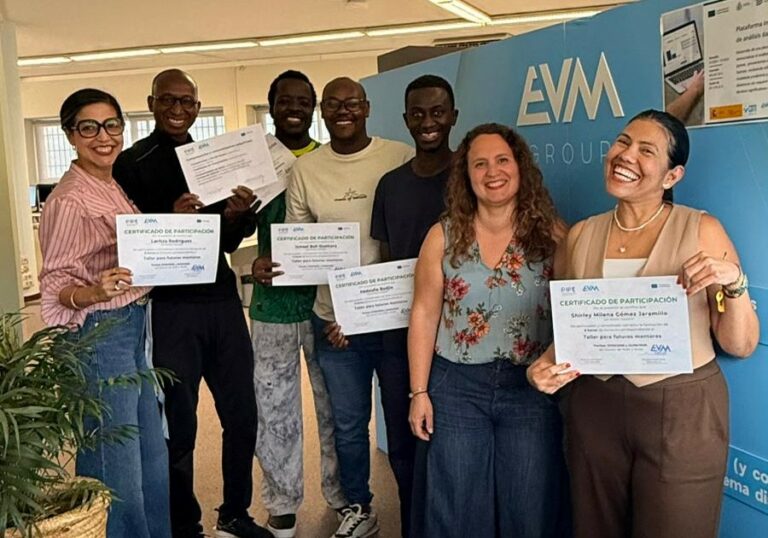
The dissemination activities culminated in the WP2 Workshop for Professionals, held on 27 July 2026 at the headquarters of Caritas Roma in Rome.
Five professionals working in migrant reception and integration participated in the face-to-face session, which was deliberately designed as a highly interactive learning experience rather than a traditional presentation.
Following an initial round of introductions, participants explored the complete WP2 learning pathway, beginning with the Diagnostic Tool, continuing with the Cultural Action Plan and concluding with the National Language Guide and the PIPE Platform.
Instead of simply presenting the project outputs, facilitators encouraged participants to test the tools directly, relate them to their own professional experiences and discuss possible applications within their organisations.
The Diagnostic Tool proved to be one of the most appreciated resources, stimulating reflection on intercultural competences and generating lively discussions on volunteer training, organisational learning and continuous professional development. Participants also explored how the Cultural Action Plan could support the design of structured training strategies and recognised the National Language Guide as a flexible repository of practical educational resources for multidisciplinary teams working with migrants.
The workshop concluded with a demonstration of the PIPE Platform and an open discussion during which participants shared recommendations for improving the toolkit, identified opportunities for future collaboration and reflected on how the developed resources could be integrated into their everyday professional practice.
Strengthening the impact of PIPE
Across all three events, participants consistently recognised the practical value of the toolkit and appreciated its integrated approach, which combines self-assessment, professional development planning and educational resources within a single learning pathway.
The feedback collected will contribute to the further refinement of the project outputs while supporting their wider dissemination among organisations working in migrant reception, inclusion and language education.
By fostering dialogue between researchers and practitioners, these activities reinforced one of the core objectives of the PIPE project: ensuring that innovative educational resources are not only developed, but also validated, shared and effectively adopted by the professionals who will use them in their daily work to promote the inclusion of migrants and refugees.
All WP2 materials are available free of charge on pipe-platform.eu.