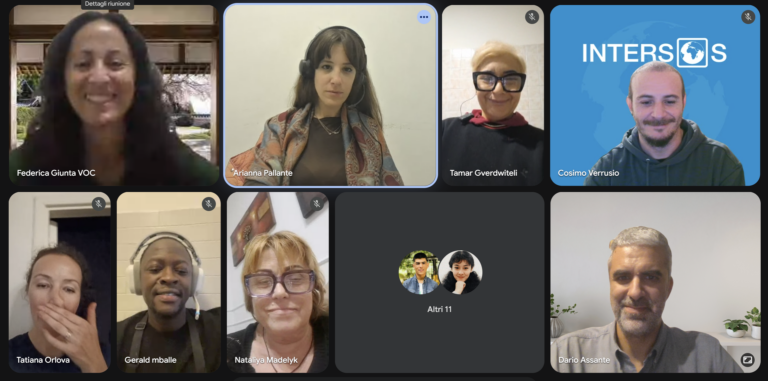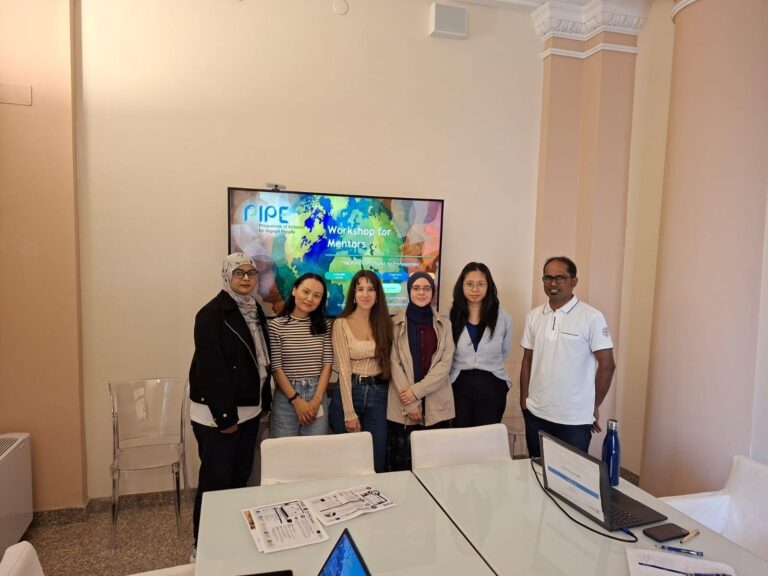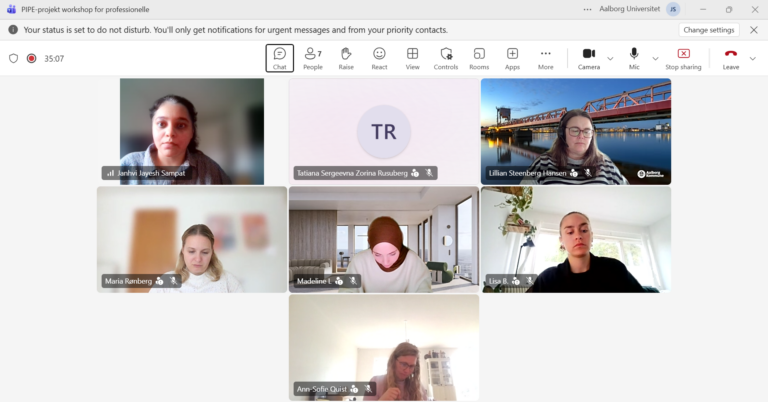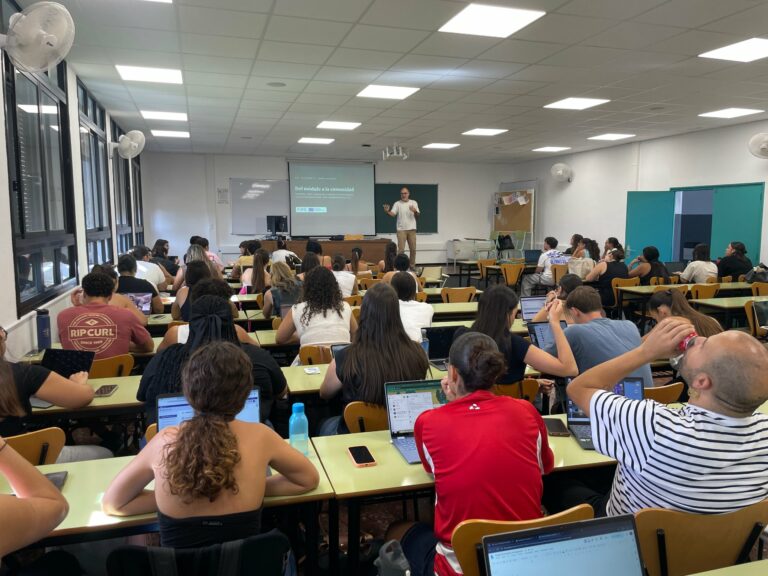

As part of the dissemination and implementation activities of Work Package 2 (WP2) of the PIPE – Program of Inclusion for Migrant People at Risk of Social Exclusion project, Hellenic Mediterranean University (HMU) organized a Workshop for Professionals and two Colloquial Talks. The activities brought together professionals and educators supporting refugees and migrants through social services, community initiatives and language education in Heraklion.
Coordinated by members of the Greek team at HMU’s Laboratory of Applied Social Research and Social Work (SoRSoW), these meetings created opportunities to explore the WP2 toolkit, exchange experiences and discuss its use in everyday practice. Feedback highlighted both the value of the resources and the organizational conditions needed to support their effective application.
The toolkit includes the National Language Teaching Guide and Resources, the Guide and Action Plan for Cultural Training for Professionals, the Diagnostic Tool within the Strategic Reception Plan, and the PIPE Platform.
Putting the tools into practice
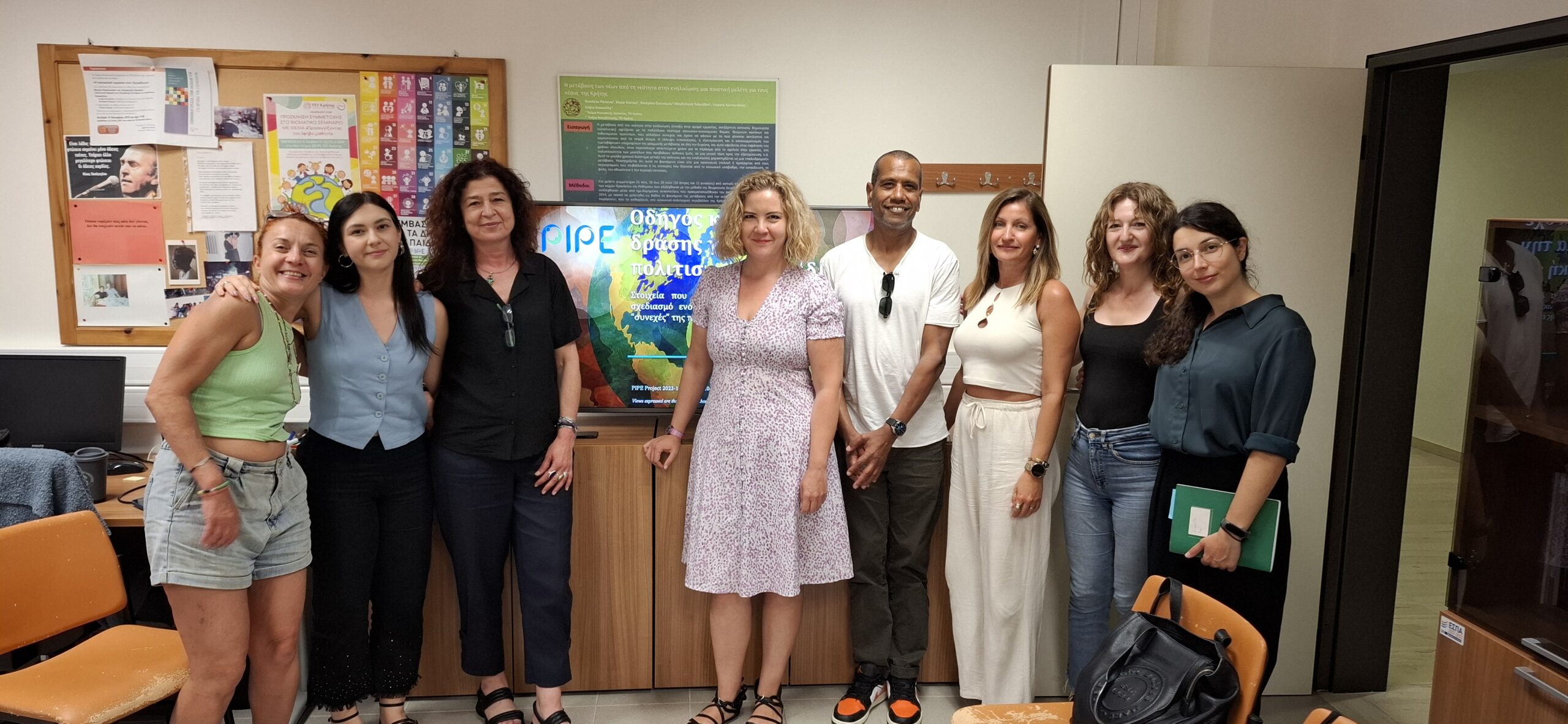
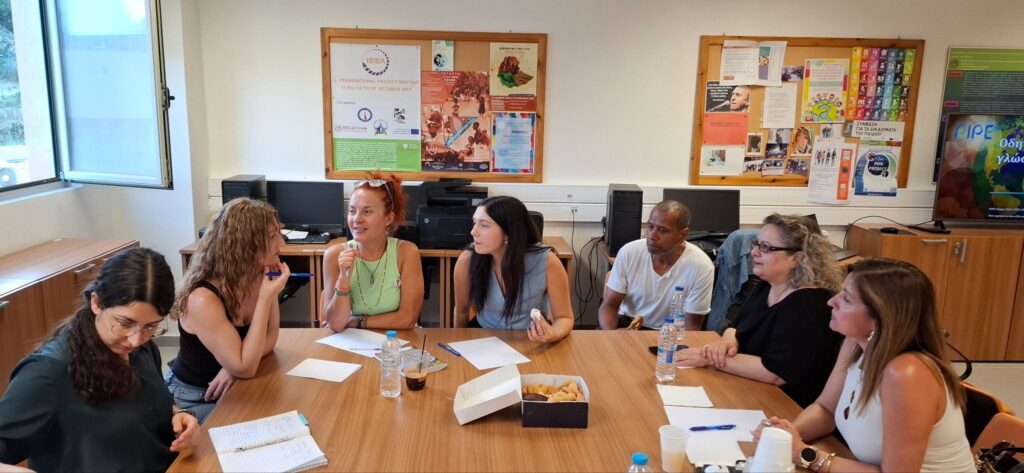
The Workshop for Professionals took place on 2 June 2026 at HMU’s Department of Social Work. Seven professionals from local government and non-profit organizations participated, bringing experience in social support and teaching Greek to adult migrants.
The workshop followed a participatory, experiential approach. Through group activities, participants designed short lessons tailored to learners’ needs, developed 90-day action plans to strengthen cultural competence within their organizations, and used the Diagnostic Tool to identify areas requiring further development.
Discussions highlighted the importance of differentiated teaching, trusting relationships, intercultural communication and cooperation between organizations. Participants also identified barriers to inclusion, including understaffed services, limited access to interpreters and intercultural mediators, and a lack of flexible language programs accommodating adult migrants’ work and family responsibilities.
Feedback from participants who completed the final evaluation questionnaire was highly positive. The Diagnostic Tool received the highest rating, with an average score of 4.86 out of 5. Participants particularly valued the practical activities and the exchange of experiences across professional fields. They expressed their intention to use the resources within their organizations and recommended further opportunities for practice, additional examples and continued support after the workshop.
Integrating sustainability into language education
The first Colloquial Talk was held online on 15 September 2026, with five professionals and educators working in education and Greek-language teaching for refugees and migrants.
The discussion focused on how sustainability and environmental awareness can be integrated into language education. Participants connected sustainability with environmental protection, responsible use of resources, human rights and the broader aims of the United Nations 2030 Agenda.
Practical suggestions included using accessible literary texts and films, introducing vocabulary related to ecology and environmental protection, and encouraging learners to exchange knowledge about green practices across cultures. Participants also shared experiences of how learners’ accounts of environmental loss could create space for dialogue and emotional connection within the classroom.
A key conclusion was that sustainability can be incorporated into existing lessons without requiring a separate subject. Participants expressed their intention to introduce more relevant activities into their teaching and welcomed further opportunities for collaboration and discussion on environmental education.
Supporting reflection and professional development
The second Colloquial Talk was also held online on 15 September 2026. It brought together five experienced professionals working in refugee and migrant inclusion: three social workers, one sociologist and one intercultural mediator.
Participants explored how the WP2 resources could support their work, particularly appreciating the Diagnostic Tool as a means of identifying areas for further learning and encouraging critical reflection at both professional and organizational levels. They emphasized that intercultural knowledge develops through continuous learning and that resources should be shared with colleagues.
The discussion also addressed challenges affecting everyday practice, including professional burnout, bureaucracy, unmet needs and limited cooperation between services. Participants stressed the need for stable, ongoing professional supervision and better coordination among organizations. Although peer exchange was recognized as empowering and supportive, it was considered insufficient to replace professional supervision.
Participants expressed their intention to use the Diagnostic Tool and highlighted the importance of knowledge sharing, collective action and advocacy. The meeting concluded with a sense of renewed motivation, hope and mutual support.
Strengthening the practical value of PIPE
Across the three activities, participants recognized the toolkit’s potential to connect professional reflection, organizational development and inclusive educational practice. The meetings also demonstrated the value of bringing together professionals from different fields to discuss shared challenges and develop practical responses.
Their feedback provides directions for improving and disseminating the WP2 resources, including more examples from everyday practice, further experiential learning opportunities and continued support for implementation. It also highlights the importance of adequate staffing, professional supervision and cooperation between services in enabling professionals to make effective use of the tools.
Through these activities, HMU strengthened dialogue between the project team and practitioners, supporting the PIPE objective of developing resources that respond to the needs of professionals and the communities they work with.
All WP2 materials are available free of charge on pipe-platform.eu.