
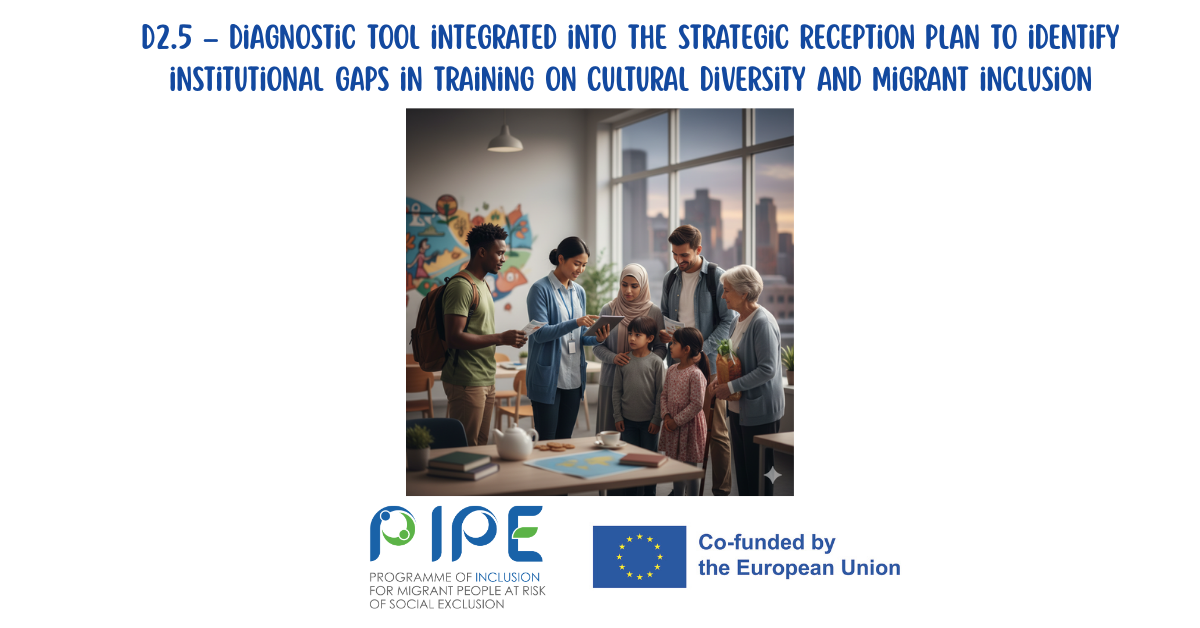
In daily work with migrant communities, “cultural competence” is not an abstract ideal. It is a set of knowledge, skills, and attitudes that shapes the quality of support, the effectiveness of interventions, and the trust built with people who may be navigating vulnerability, uncertainty, or trauma. To support public body staff in strengthening these capacities and better implementing diversity strategies, the Program for the Inclusion of Migrants at Risk of Exclusion (PIPE) offers a structured self-assessment questionnaire designed to identify strengths, highlight development needs, and provide tailored training resources based on results.
A quick tool with a clear structure
The questionnaire is meant to be completed in 5–10 minutes. It does not aim to “rank” respondents, but to provide a practical snapshot that can guide learning and improvement. Honesty is essential: the value lies in an accurate picture of current practice, not in “performing” the right answers.
Two alternative pathways: professional (ideal-competence) or practical
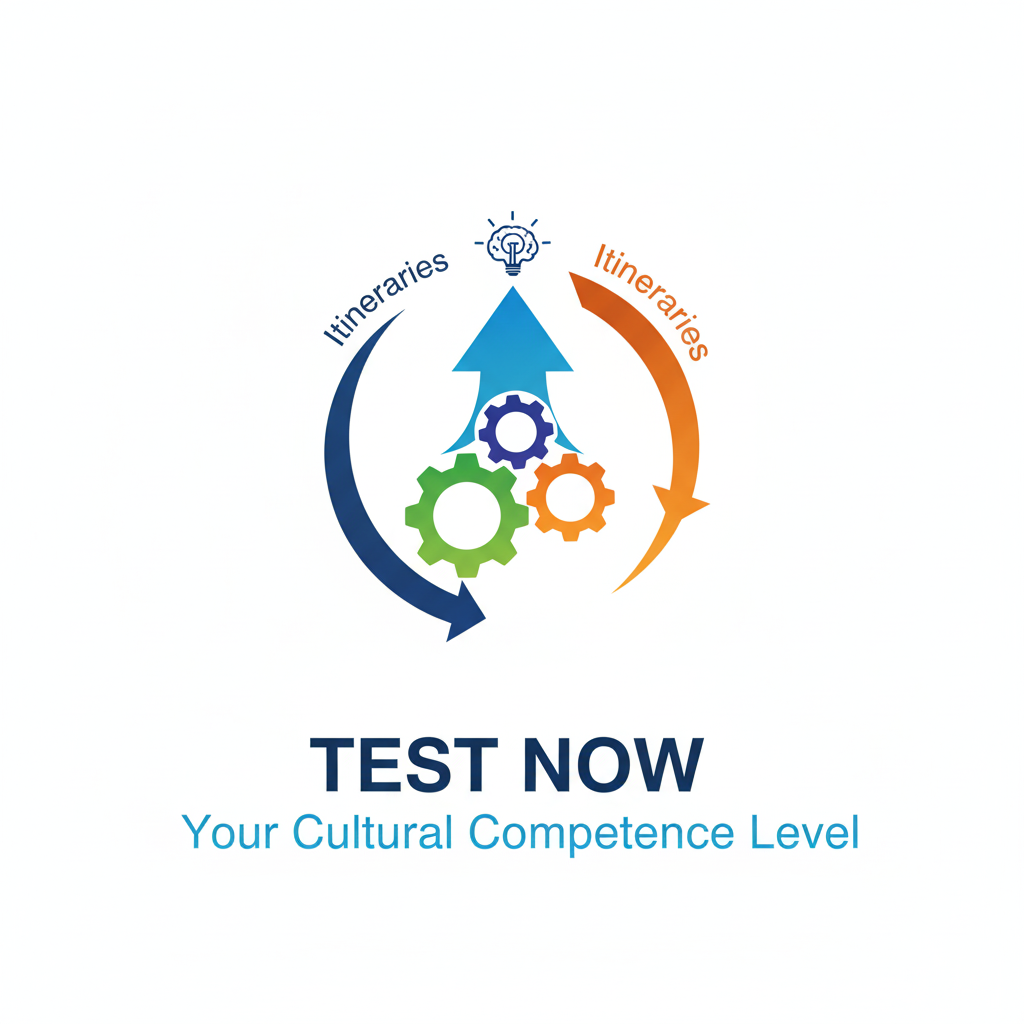
A distinctive feature of the PIPE tool is that it offers two different itineraries:
- Professional Itinerary: focuses on ideal competencies from a formal perspective, emphasizing theoretical knowledge and best practices.
- Practical Itinerary: presents real-life dilemmas and scenarios that reflect authentic challenges of intercultural work—especially the subtle, everyday situations where bias, frustration, or misunderstandings may appear.
The response scales differ accordingly: the professional track uses an agreement scale, while the practical track uses a frequency scale (from “it would never happen to me” to “it would always happen to me”).
Five blocks for a holistic view of cultural competence
The 12 questions are organized into five assessment blocks, covering the full spectrum of intercultural practice—from initial adaptation support to community-level action.
1) Initial phase – pre-cultural competence
Assesses readiness to support early adaptation: explaining local customs, guiding migrants to language-learning resources, and designing activities that foster belonging and mutual respect. It also includes “mirror items” that capture common pitfalls—such as oversimplifying complex realities (bureaucracy, discrimination) or feeling discouraged when language learning appears difficult due to psychological barriers or trauma.
2) Cultural knowledge
Explores knowledge of the histories, values, traditions, and family systems of the communities served, and—crucially—understanding of structural factors affecting migrants (policies, public services, discrimination). It invites reflection on implicit judgments and the tendency to downplay experiences of institutional discrimination.
3) Cultural skills
Focuses on practice-based abilities: culturally attuned interview techniques, addressing sensitive topics when relevant (religion, sexuality, politics), avoiding infantilizing language when someone struggles with the local language, and distinguishing between individual-level issues and structural barriers.
4) Cultural meetings
Look at meaningful intercultural encounters that help public body staff rethink assumptions and dismantle stereotypes—also examining whether expectations of “integration” unconsciously vary across groups. Even though brief, this block often reveals how experience shapes a public service perspective.
5) Cultural expertise and community action
Moves beyond one-to-one support toward systemic and community dimensions: designing community programs where migrants and locals cooperate on shared goals; facilitating activities that build common ground; avoiding “tokenistic” intercultural events that reinforce stereotypes; and promoting autonomy and community leadership rather than keeping migrants in the role of “permanent beneficiaries.”
From results to a personalized learning pathway
The tool provides an interpretation framework for each block (e.g., strong performance, emerging skills, early-stage development) and a global assessment that situates respondents along a progression—from early awareness through cultural competence to advanced cultural expertise. Based on these outcomes, PIPE links results to specific training priorities, such as intercultural communication, empowerment approaches, anti-racism work, conflict mediation, participatory design, and even higher-level capacities like training-of-trainers and intercultural policy redesign.
Why this matters (even for experienced public service staff)
Used well, a questionnaire like PIPE helps to:
- make everyday habits and blind spots visible (simplification, discomfort with sensitive topics, unequal expectations);
- connect individual practice to structural realities affecting migrants;
- shift staff development from generic training to targeted learning aligned with real needs
Ultimately, the PIPE questionnaire is a practical entry point for building more inclusive, reflective, and effective public services—supporting public bodies in implementing diversity strategies while bridging formal competencies with the lived complexity of practice.